
Background.
The first sign that Bonny Island had truly changed was not the smooth asphalt stretching across swamps and creeks. It was the sight of commercial buses lined up across Port Harcourt, their conductors loudly calling out a destination that, until recently, could only be reached by boat or helicopter.
“Bonny! Bonny! Bonny!”
For many Nigerians, hearing a bus loading passengers to Bonny was almost unimaginable.
For centuries, the ancient Bonny Kingdom—one of Nigeria’s oldest commercial ports and home to the Nigeria Liwuified Natural Gas (NLNG) plant—remained physically cut off from the mainland.
Surrounded by rivers, mangrove forests and the Atlantic Ocean, travelling to the island demanded courage, patience and, often, prayers. The only practical option was by sea.
Thousands of residents, workers and visitors relied on commercial speedboats departing from Marine Base, Tourist Beach, Abuloma jetty and Nembe Waterfront in Port Harcourt and after traveling kilometers and spending thousands of naira to get to the jetties. Every journey carried its own uncertainty. During rough weather, passengers anxiously watched dark clouds gather over the atlantic. Stories of boat mishaps, engine failures and pirate attacks became part of everyday conversations making unattractive for all who nurse phobia for sea travels.
Only a privileged few, usually, high ranking officials, company employees and some high net worth individuals escaped those risks by travelling in helicopters.
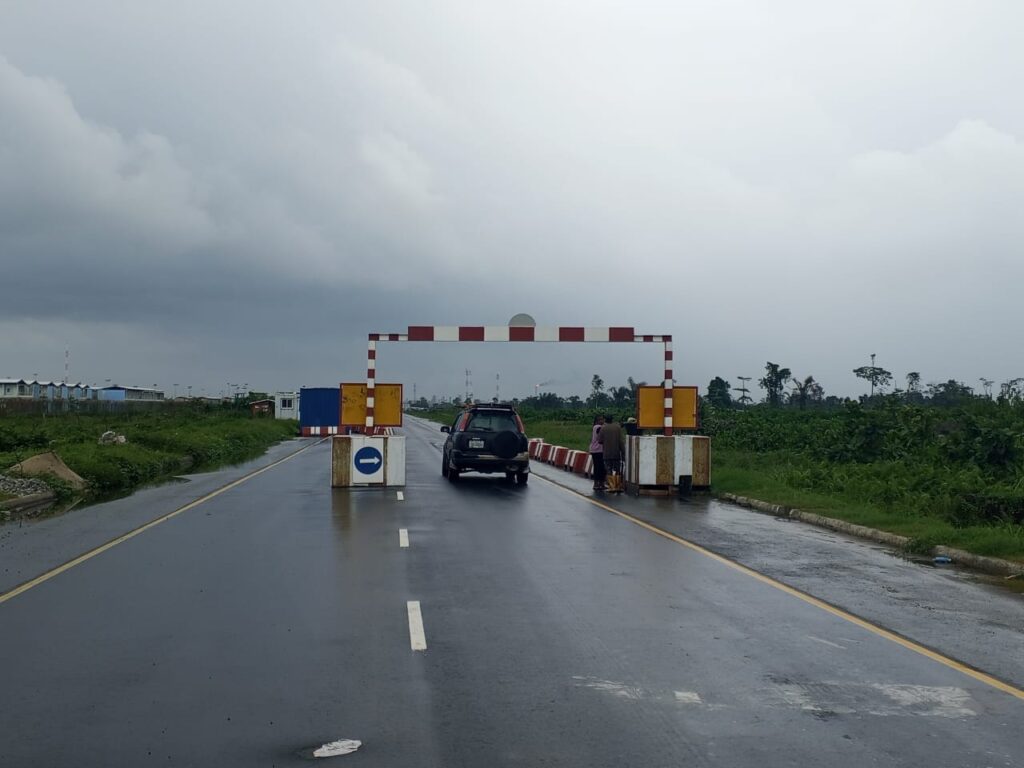
However, everything began to change on December 8, 2025, when the Federal Government opened the Bodo-Bonny Road to restricted vehicular traffic following the directive of the Minister of Works, Engr. David Umahi, while final construction continued ahead of its official commissioning by President Bola Ahmed Tinubu.
Curious to witness this historic transformation firsthand, this reporter joined other journalists on a road trip to Bonny.
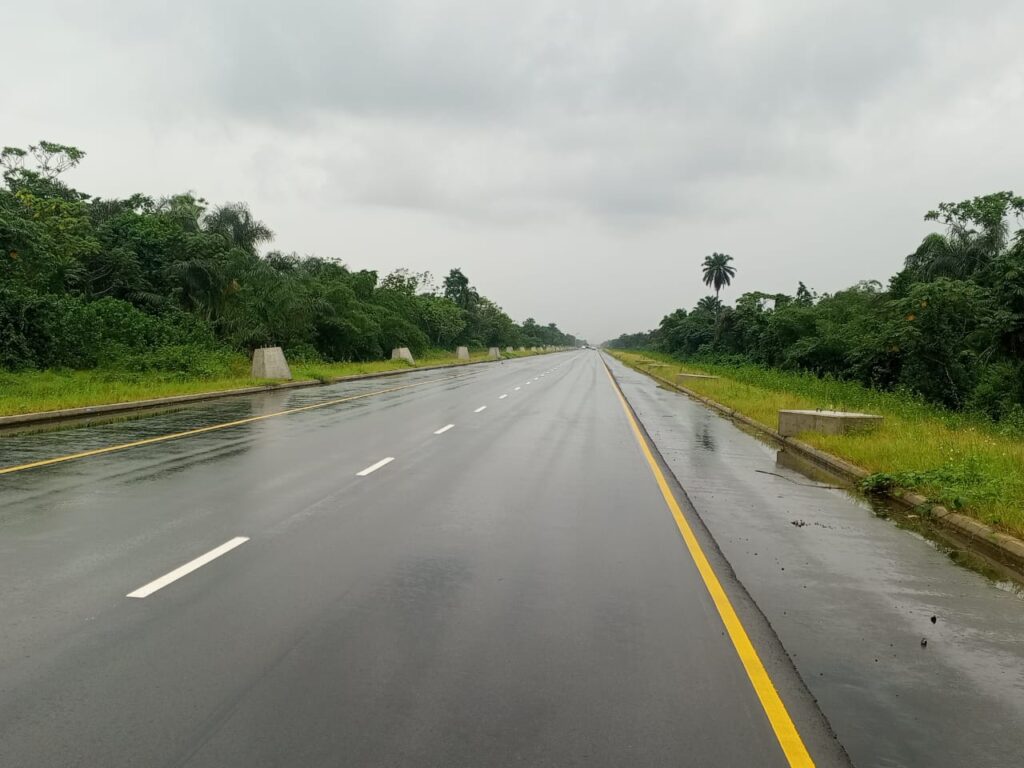
Even heavy rainfall midway through the journey could not diminish the significance of the moment. For perhaps the first time, travelling to Bonny by road felt routine rather than adventurous.What had once been an isolated island was now connected to mainland Nigeria by road.
Nature, Scope and Cost of the Project.
The Bodo-Bonny Road is far more than another federal highway.
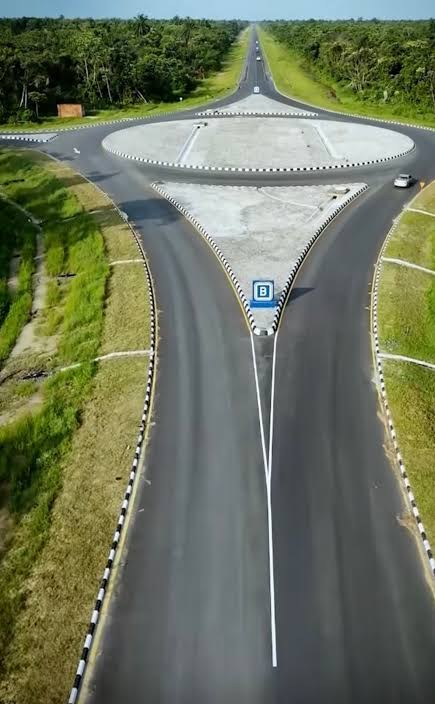
Stretching 37.9 kilometres, it is the first road ever built to connect Bonny Island with mainland Rivers State, ending centuries of dependence on waterways.
Its construction was never expected to be easy, after decades of delay by successive governments, probably because of the stretch, difficult terrain and cost implications.
The road passes through one of the most difficult terrains in the Niger Delta—vast mangrove forests, tidal creeks, swamps and waterlogged marshes that challenged engineers at every stage.
Conceived under a tripartite agreement signed in 2017, the project brought together the Federal Government, Nigeria LNG Limited (NLNG) and Julius Berger Nigeria Plc in what has become one of Nigeria’s largest public-private infrastructure partnerships.Originally valued at about ₦120.6 billion, the funding arrangement required NLNG to contribute approximately ₦60.3 billion—half of the total project cost—while the Federal Government provided the remaining half.
The engineering accomplishments are remarkable.
Three major bridges, including the impressive 502-metre Alpha Creek Bridge, nine mini bridges, massive embankments and several kilometres of elevated roadway now traverse terrain that many once considered impossible to conquer. Today, motorists cross landscapes where only boats once sailed.
Economic and Social Benefits.
The real story of the Bodo-Bonny Road begins after the journey ends.
At the Bonny motor park operated by the National Union of Road Transport Workers (NURTW), the transformation is impossible to miss.Despite persistent rain, vehicles arrived almost continuously.
Some discharged passengers while others quickly loaded travellers heading for Port Harcourt, Aba, Owerri, Uyo, Benin and other destinations.Secretary of the Bonny Branch of the NURTW, Prince Eze, struggled to hide his excitement.
According to him, the temporary park has already become too small because passenger traffic has increased dramatically since the road was opened.
Soon, he said, passengers will board vehicles directly from Bonny to Lagos.For the first time in history, Bonny is gradually becoming part of Nigeria’s national road transport network.The impact extends beyond the motor park.
The once-thriving boat business has witnessed a dramatic decline.
Before the road opened, thousands depended daily on boats, paying between ₦10,000 and ₦12,000 for the trip.
Today, boat operators have been forced to slash fares to between ₦7,500 and ₦9,000 in an effort to retain customers. It cost just between N4,000 to N5,000 by bus from Bonny to Port Harcourt depending on which part of Port Harcourt you are traveling to.Even then, many commuters now prefer the approximately one-hour road journey.
The benefits go beyond convenience.Lower transport costs, improved movement of goods, easier access to healthcare and education, increased tourism, greater investment opportunities and expanded markets are already beginning to reshape Bonny’s economy.
Businesses now have easier access to suppliers. Residents can travel more frequently. Investors who once hesitated because of logistics now have a practical alternative.
For NLNG, whose operations are located on Bonny Island, the road also represents an important step towards improving accessibility to one of Nigeria’s most strategic industrial hubs.
“NLNG welcomes the partial opening of the Bonny-Bodo Road as a significant milestone in the delivery of a transformational infrastructure project that has been anticipated for decades.
The development represents tangible progress towards providing permanent road access to Bonny Island and reflects the value of the partnership between the Federal Government and NLNG”, says an official of the company who prefers to remain anonymous.
“While the road is currently open to light vehicular traffic pending full completion, the milestone is expected to improve connectivity, ease the movement of people and goods, enhance safety by reducing dependence on water transportation, and unlock greater socio-economic opportunities for Bonny Kingdom, Rivers State and the wider Niger Delta”.
Reactions.
Perhaps no one captured the emotions surrounding the project better than Prince Eze.Speaking with obvious pride, he described the road as the greatest gift his generation has received.
“Our fathers and grandfathers prayed for this road but never lived to see it,” he said.
According to him, travelling by sea was always an exercise in faith.”When you enter a boat, your life is no longer in your hands. You pray until you arrive safely because if anything happen in the middle of the sea, there is nowhere to run.”
Road travel, he said, offers something that water transportation never could—options.”If a vehicle develops a fault, people come down, repairs are made and the journey continues. But on the sea, if anything goes wrong, only God can save you.”
He described the road as a project that brought “light” to Bonny, praising both NLNG and the Federal Government for remaining committed despite numerous challenges.
While expressing gratitude, he appealed to government to extend the present 7 p.m. for the road closure to at least 9 p.m., noting that some travellers are forced to spend the night outside the security gate whenever they arrive after closing time.
Former Vice Chairman of Gokana Local Government Area, Pius Dukor, and community leader in Bodo City a neighbouring community to Bonny, believes the benefits will extend well beyond Bonny.
According to him, neighbouring Bodo and surrounding communities will witness increased commercial activities, rising land values, greater social interaction and stronger economic cooperation.
He predicts that investors, businesses and home seekers will increasingly look towards communities along the new road corridor as development accelerates.
Conclusion
Some roads merely connect places.
The Bodo-Bonny Road connects history with the future.It has ended generations of physical isolation, replacing dangerous sea journeys with safer, faster and more reliable road transportation.
It is already changing how people travel, trade, invest and live.For decades, Bonny was an island separated from the rest of Nigeria by water. Today, that water is no longer a barrier.
The highway has become more than a civil engineering achievement. It is a bridge between communities, a catalyst for economic growth and a symbol of what sustained partnership between government and the private sector can accomplish.
As more vehicles roll daily across its bridges and embankments, one truth becomes increasingly evident: the Bodo-Bonny Road has not merely opened a route—it has opened a new chapter in the history of the ancient Bonny Kingdom.
