
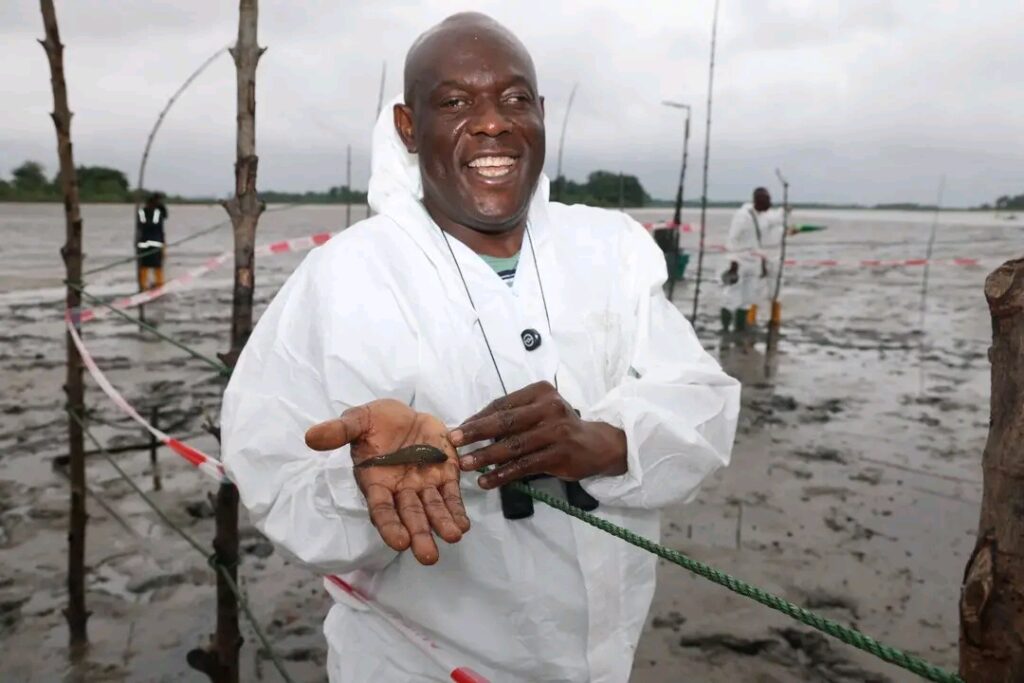
By: Felix Ikpotor
Project Coordinator of the Hydrocarbon Pollution Remediation Project, HYPREP, Prof. Nenibarini Zabbey, has stated that the agency is using applying both scientific and traditional methods in ensuring the restoration of the biodiversity of Ogoniland following years of hydrocarbon pollution.
Zabbey said this in a statement to mark this year’s World Mangrove Day.
He reaffirmed the Project’s commitment to restoring oil-degraded mangroves in Ogoniland and to promoting community-led conservation and citizen stewardship.
”As we celebrate this significant day, it is worth noting that HYPREP is combining modern ecological science with traditional knowledge to restore vital mangrove biodiversity in Ogoni communities and engaging local communities in conservation measures, which aligns with this year’s theme: “Raise Awareness of the Importance of Mangrove Ecosystems for Sustainable Conservation, Management and Use,” Zabbey stated.
He said the year’s theme is a remindet that raising awareness is essential to the sustainable conservation, management and use of mangrove ecosystems, which are among the world’s most productive and valuable natural assets, adding that it also emphasises ecosystem resilience, coastal protection and the blue economy.
”The theme focuses on local restoration highlights, community action and integrated coastal management, all of which HYPREP is committed to and promoting in Nigeria”, he said.
”HYPREP has made deliberate and concerted efforts in its mangrove restoration programme, recognising the significant benefits mangroves provide to the people of the Niger Delta, ” he added.
He outlined other benefits of mangroves to include protecting coastlines from erosion and storm surges, improve water quality, provide breeding and nursery grounds for fin fish and shellfish, conserve biodiversity, and store vast amounts of “blue carbon,” making them critical in combating climate change amongst other benefits.
The Project Coordinator said following the recommendations of the 2011 United Nations Environment Programme (UNEP) report on the Environmental Assessment of Ogoniland, HYPREP has made remarkable progress in reversing decades of mangrove degradation caused by oil pollution and unsustainable human practices, such as overharvesting for firewood and unregulated conversion for other development. He disclosed that Phase 1 of the HYPREP Mangrove Restoration Programme successfully restored 560 hectares of oil-degraded mangrove, achieving over 90 per cent seedling/sapling survival after two years.
He said monitoring data show an impressive recovery of mangrove-associated fauna. Building on the Phase 1 success, he said Phase 2 is currently underway across seven communities (Bomu, Lewe, Kpor, K. Dere, Bodo, Goi, and Gbe) in Ogoniland and restoring an additional 438 hectares of degraded mangrove.
Zabbey said the Ogoni restoration programme also supports Nigeria’s Nationally Determined Contributions (NDC 3.0) by enhancing carbon sequestration, strengthening climate resilience and advancing nature-based solutions to climate change.
One of HYPREP’s landmark achievements he ststed is the successful designation of the Ogoni Mangrove Wetland as a Ramsar Site of International Importance, fulfilling another key recommendation of UNEP. This international recognition the PC noted, underscores the ecological significance of the Ogoni mangrove wetlands and serves as a vital enabler of ecotourism investment and long-term protection.
Zabbey related HYPREP’s commitment to implementing the United Nations Environment Programme (UNEP) recommendations to secure lasting environmental health and economic prosperity for the peoples of the Niger Delta. He called on the communities to continue supporting the Project’s activities to ensure the successful conservation and sustainability of the provided facilities and other restoration initiatives in the communities.
”As we commemorate this important day, HYPREP calls on governments, development partners, civil society, researchers and local communities to strengthen collaboration to protect and sustainably manage mangrove ecosystems. Raising awareness must inspire collective action to safeguard these invaluable ecosystems for future generations. Together, we are restoring degraded landscapes, rebuilding livelihoods, conserving biodiversity and contributing to global climate action, ” He stated.
